
Accredited Level 6 Diplomas in Trauma Focused Practice
Developing the Next Generation of Trauma-Focused Professionals
Validated by the Scottish Qualification Authority

Why Trauma Focused Practice Matters
Across every sector, professionals are encountering the effects of trauma in the individuals, families, communities, and organisations they support.
Yet despite the growing recognition of trauma's impact, specialist trauma education remains limited within many professional training pathways.
The Trauma Regulation Board's Level 6 Professional Diploma in Working with Complex Trauma and PTSD has been developed to address this challenge.
Designed for practitioners, leaders, and organisations seeking advanced expertise, this SQA-validated programme provides a structured framework for understanding trauma, supporting recovery, improving professional decision-making, and strengthening outcomes across diverse populations and services.
More than a qualification, this diploma forms part of a wider professional pathway designed to develop specialist knowledge, professional credibility, and advanced trauma-informed capability.
Are you professionally capable, competent and curious?
Designed for Professionals
Many trauma programmes focus on awareness.
This diploma has been designed to develop advanced professional competence.
Grounded in contemporary trauma science and the internationally recognised tri-phasic model of trauma recovery, the programme equips practitioners with the knowledge, clinical reasoning, and professional judgement required to work effectively with complex trauma presentations across diverse settings.
Rather than teaching isolated theories or techniques, the curriculum develops an integrated framework for assessment, formulation, stabilisation, treatment planning, and recovery-oriented practice.
Throughout the programme, learners develop competence in:
• Trauma-informed assessment and formulation
• Differential understanding of Post-Traumatic Stress Disorder (PTSD) and Complex Post-Traumatic Stress Disorder (C-PTSD)
• Structured treatment planning and intervention strategy
• Data-informed decision-making and outcome-focused practice
• Safety, stabilisation, and therapeutic containment
• Emotional regulation and affective recovery frameworks
• Neurobiology of trauma and nervous system adaptation
• Attachment, dissociation, and developmental trauma
• Trauma-related behavioural, cognitive, and relational presentations
• Recovery planning, reintegration, and post-traumatic growth
The programme introduces evidence-informed approaches including Skills Training in Affective and Interpersonal Regulation (STAIR), Cognitive Processing Therapy (CPT), trauma-focused formulation frameworks, and structured recovery planning models.
Learners are supported to move beyond symptom-focused practice and develop a deeper understanding of trauma as a neurobiological, psychological, relational, and systemic phenomenon.
The result is a qualification that develops more than knowledge alone. It develops the capacity to assess, formulate, plan, and respond to trauma presentations with greater confidence, precision, and professional competence.
For professionals working across health, social care, education, criminal justice, emergency services, military, and community settings, these capabilities are becoming increasingly essential to safe, effective, and evidence-informed practice.
If you are committed and complete the Diploma, you can join our developing team and contribute to future developments
Total Fees
£5000
See Discounts below
Dates
Monday 21st September 2026
Apply By
Monday 14th September 2026
Commitment
Part Time
Format
Online
Duration
1 Year
Core Curriculum
The diploma consists of eight core modules (120 credits) that collectively develop the assessment, formulation, decision-making, and treatment-planning capabilities required for effective trauma-informed practice, with your specialist curriculum integrated throughout.
Going beyond focusing on trauma theory, the programme is designed to bridge the gap between knowledge and application.
Learners are supported to understand how trauma presents across biological, psychological, relational, behavioural, and systemic domains, and how this understanding informs professional judgement, intervention planning, and recovery pathways.
Assessment methods include:
• Applied professional discussions
• Open-book examinations
• Presentations
• Evidence-informed case analysis
• Trauma formulation exercises
• Treatment planning assignments
• Reflective practice activities
• Two comprehensive theory-to-practice case studies
The assessment framework has been designed to evaluate not only what participants know, but their ability to assess, formulate, plan, and respond to complex trauma presentations within professional settings.
Specialist Curriculum
In addition to the eight core diploma modules (120 credits), learners undertake a specialist pathway worth an additional 18 credits.
Each pathway has been designed to apply trauma-informed practice to a specific sector, population, or area of professional practice.
Pathways incorporate advanced learning in areas such as assessment and formulation, differential understanding of trauma presentations, treatment and support planning, risk-informed decision-making, safeguarding, professional judgement, multi-agency practice, recovery pathways, and sector-specific applications of trauma-informed care.
formulation, and treatment planning
• Sector-specific legislation, policy, and governance
• Trauma-informed intervention planning
• Cultural, social, and systemic influences on trauma
• Reflective practice, professional boundaries, and ethical reasoning
• Multi-agency working and integrated care pathways
• Recovery planning, reintegration, and post-traumatic growth
Each pathway combines applied learning, case-based analysis, reflective practice, and specialist assessment to develop advanced expertise within a chosen area of practice.
Core Modules
Specialist Units
Module 1 – Trauma Foundations, Diagnostic Frameworks & Treatment Planning
Trauma Foundations, Diagnostic Frameworks & Treatment Planning
This module provides the foundation for the entire diploma and introduces learners to the contemporary understanding of psychological trauma, Post-Traumatic Stress Disorder (PTSD), and Complex Post-Traumatic Stress Disorder (C-PTSD).
Learners examine the evolution of trauma theory, international diagnostic frameworks, and current evidence-informed approaches to assessment, formulation, and treatment planning. Particular emphasis is placed on understanding the distinction between PTSD and Complex PTSD, recognising trauma presentations across diverse populations, and developing the knowledge required to make safe, informed, and professionally defensible decisions.
The module introduces the internationally recognised tri-phasic model of trauma recovery and explores why sequencing, stabilisation, assessment, and treatment planning are fundamental to effective trauma-informed practice. Learners are also introduced to current national and international practice guidelines, psychometric assessment tools, contraindicated approaches, and the principles of structured trauma formulation.
Areas of Study
• Foundations of psychological trauma
• PTSD and Complex PTSD diagnostic frameworks
• ICD-11 and DSM-5 classifications
• Disturbances in Self-Organisation (DSO)
• Trauma symptom clusters and presentation patterns
• National and international trauma practice guidelines
• Trauma-informed assessment and psychometric screening
• Differential understanding of PTSD and Complex PTSD
• The tri-phasic model of trauma recovery
• Safety, stabilisation, processing, and reintegration
• Evidence-informed treatment approaches
• Contraindicated interventions and risk considerations
• Trauma formulation and treatment planning
• Data-informed decision making within trauma-informed practice
Professional Application
By the end of this module, learners will be able to recognise and differentiate trauma presentations, interpret diagnostic frameworks, understand the rationale underpinning contemporary trauma treatment models, and develop structured trauma-informed assessment and treatment plans aligned with current evidence and best practice.
Module 2 – Trauma Assessment, Psychometrics & Formulation
Effective trauma-informed practice begins with accurate assessment, structured formulation, and informed decision-making.
This module develops the knowledge and skills required to undertake comprehensive trauma-informed assessment, interpret psychometric data, identify presenting difficulties, and formulate coherent intervention pathways. Learners are introduced to a range of recognised trauma assessment tools and screening measures used to support understanding of symptom presentation, severity, functional impact, and treatment planning.
The module explores the relationship between assessment, formulation, risk, protective factors, strengths, and recovery planning. Learners develop an understanding of how trauma-related symptoms can present across emotional, cognitive, behavioural, relational, and physiological domains, and how these presentations may overlap with other mental health difficulties.
Particular emphasis is placed on moving beyond symptom identification alone and developing the ability to construct holistic, person-centred formulations that recognise the influence of trauma, adversity, attachment, neurobiology, environment, culture, and meaning-making on an individual's experience.
Areas of Study
• Principles of trauma-informed assessment
• Clinical interviewing and information gathering
• Trauma screening and psychometric assessment tools
• Symptom cluster identification and interpretation
• Risk and protective factor assessment
• Trauma formulation frameworks
• Differential presentation and co-occurring difficulties
• Attachment-informed assessment
• Dissociation and trauma-related adaptations
• Functional impairment and quality of life assessment
• Strengths-based and recovery-oriented assessment
• Data-informed decision-making
• Case conceptualisation and formulation
• Trauma-informed treatment planning
Professional Application
By the end of this module, learners will be able to undertake structured trauma-informed assessments, interpret assessment findings appropriately, identify key symptom patterns, and develop evidence-informed formulations that support safe, ethical, and effective intervention planning.
Learners will gain the ability to move beyond diagnosis-led thinking and develop a deeper understanding of how trauma, adversity, relationships, neurobiology, and environment interact to shape individual presentations, needs, risks, and recovery pathways.
Module 3 – Neuroscience, Dissociation & Nervous System Adaptation
Trauma is not stored solely as a memory. It is encoded throughout the brain, body, and nervous system, influencing perception, emotion, behaviour, relationships, and physiological functioning.
This module explores the neurobiological foundations of trauma and examines how adverse experiences can shape the development and functioning of key neurological, hormonal, and autonomic systems. Learners develop an advanced understanding of how trauma impacts the stress response system, emotional regulation, memory processing, threat detection, attachment systems, and executive functioning.
Particular emphasis is placed on understanding trauma as an adaptive response to overwhelming experiences rather than a pathological failure. The module examines how survival-based adaptations, including hypervigilance, emotional dysregulation, dissociation, avoidance, and somatic symptoms, emerge from neurobiological processes designed to protect the individual from threat.
Learners are introduced to contemporary models including Polyvagal Theory, attachment neuroscience, structural dissociation, memory processing systems, and the neurobiology of Complex PTSD, enabling them to interpret trauma presentations through a scientifically informed and trauma-responsive lens.
Areas of Study
• Foundations of trauma neuroscience
• The autonomic nervous system and survival responses
• Fight, flight, freeze, submit, and attachment responses
• Neurobiology of PTSD and Complex PTSD
• Brain structures involved in trauma processing
• The amygdala, hippocampus, and prefrontal cortex
• The HPA axis and chronic stress adaptation
• Polyvagal Theory and nervous system regulation
• Memory systems and traumatic memory storage
• Dissociation and structural adaptation
• Attachment, neurodevelopment, and relational regulation
• Emotional regulation and affective instability
• Somatic manifestations of trauma
• Neuroplasticity and recovery
Professional Application
By the end of this module, learners will be able to explain trauma presentations through a neurobiological framework, recognise the physiological mechanisms underlying distress and behavioural adaptation, and apply neuroscience-informed principles to assessment, stabilisation, psychoeducation, and recovery planning.
Learners will develop the ability to understand behaviours that may appear irrational, resistant, or maladaptive as meaningful adaptations to threat, adversity, and survival. This understanding supports more compassionate, evidence-informed, and effective professional responses across health, social care, education, criminal justice, emergency services, and community settings.
Module 4 – Safety, Stabilisation & Trauma Recovery
Safety and stabilisation form the foundation of effective trauma recovery.
Contemporary trauma research consistently demonstrates that meaningful recovery cannot occur whilst individuals remain overwhelmed by threat responses, emotional dysregulation, chronic hyperarousal, dissociation, or ongoing environmental instability. Before deeper trauma processing can be considered, individuals must first develop the internal and external resources necessary to achieve safety, emotional regulation, and psychological stability.
This module explores the first phase of the internationally recognised tri-phasic model of trauma recovery and provides learners with a comprehensive understanding of the principles, interventions, and professional considerations that underpin trauma stabilisation.
Learners develop the ability to identify stabilisation needs, formulate phase-appropriate interventions, and support individuals experiencing trauma-related distress through evidence-informed approaches that prioritise safety, regulation, containment, and resilience building.
The module emphasises the importance of working within an individual's window of tolerance, recognising indicators of readiness for progression, and understanding the potential risks associated with premature trauma processing.
Areas of Study
• The first phase of the tri-phasic model
• Internal and external safety
• Trauma-informed stabilisation principles
• Window of Tolerance theory
• Hyperarousal, hypoarousal, and nervous system regulation
• Emotional containment and distress tolerance
• Grounding and present-moment orientation
• Psychoeducation as a stabilisation intervention
• Managing flashbacks and intrusive symptoms
• Sleep disturbance and trauma-related fatigue
• Dissociation and stabilisation approaches
• Resource development and resilience building
• Strengthening self-regulation capacity
• Identifying readiness for trauma processing
• Contraindications and phase-based decision-making
Professional Application
By the end of this module, learners will be able to identify when stabilisation is required, apply evidence-informed strategies to support emotional regulation and safety, and develop structured stabilisation plans tailored to individual needs.
Learners will gain the ability to recognise the difference between crisis management and trauma recovery, understand how to reduce physiological and psychological overwhelm, and support individuals in developing the skills required for longer-term recovery and wellbeing.
The module strengthens practitioners' ability to work safely and ethically with trauma-affected individuals whilst reducing the risk of re-traumatisation, emotional flooding, and inappropriate intervention sequencing.
Module 5 – Emotional Regulation, Attachment & Interpersonal Functioning
Trauma does not only affect how individuals feel. It influences how they regulate emotions, form relationships, experience connection, interpret threat, and navigate the social world.
This module explores the relationship between trauma, attachment, emotional regulation, and interpersonal functioning, providing learners with an advanced understanding of how early experiences, relational environments, and adverse life events shape patterns of emotional and relational development across the lifespan.
Learners examine how attachment disruptions, developmental trauma, chronic stress, neglect, abuse, loss, and relational instability can influence emotional regulation capacity, self-concept, trust, boundaries, communication, and relationship functioning. Particular emphasis is placed on understanding emotional dysregulation as an adaptive response to adversity rather than a character flaw, personality deficit, or behavioural problem.
The module introduces evidence-informed approaches to emotional regulation and interpersonal skill development, including Skills Training in Affective and Interpersonal Regulation (STAIR), attachment-informed practice, and trauma-informed approaches to strengthening relational safety, resilience, and emotional wellbeing.
Areas of Study
• Foundations of attachment theory
• Secure, anxious, avoidant, and disorganised attachment patterns
• Developmental trauma and relational adversity
• Emotional regulation and affective functioning
• Skills Training in Affective and Interpersonal Regulation (STAIR)
• Attachment injury and relational trauma
• Shame, self-worth, and identity development
• Trust, boundaries, and relational safety
• Communication and interpersonal effectiveness
• Conflict, withdrawal, and relational adaptation
• Emotional awareness and self-regulation
• Co-regulation and supportive relationships
• Trauma-informed relationship building
• Resilience, connection, and relational recovery
Professional Application
By the end of this module, learners will be able to recognise how attachment experiences and trauma histories influence emotional regulation, behaviour, communication, and relationship patterns. Learners will develop the ability to identify common attachment-related adaptations and apply evidence-informed approaches that support emotional resilience, relational safety, and interpersonal functioning.
The module strengthens practitioners' ability to work effectively with individuals who experience emotional dysregulation, relationship difficulties, trust issues, abandonment fears, social withdrawal, or trauma-related interpersonal challenges, whilst maintaining appropriate professional boundaries and trauma-informed practice principles.
Module 6 – Trauma Processing Models & Evidence-Informed Interventions
Once safety, stabilisation, and emotional regulation have been established, individuals may be ready to begin the process of addressing unresolved traumatic memories and their associated emotional, cognitive, behavioural, and physiological impacts.
This module explores the second phase of the internationally recognised tri-phasic model of trauma recovery and introduces learners to a range of contemporary evidence-informed trauma processing approaches. Particular emphasis is placed on understanding the principles underpinning trauma processing, the importance of readiness and intervention sequencing, and the factors that influence treatment selection.
Rather than promoting a single therapeutic model, the module examines the strengths, limitations, indications, and clinical considerations associated with a variety of recognised trauma-focused interventions. Learners develop an understanding of how different approaches target traumatic memories, maladaptive beliefs, emotional distress, behavioural adaptations, and physiological responses to trauma.
The module emphasises the importance of individualised treatment planning and supports learners in developing a broader understanding of how evidence-informed interventions can be integrated within a structured trauma recovery framework.
Areas of Study
• The second phase of the tri-phasic model
• Principles of trauma processing and memory integration
• Treatment readiness and intervention sequencing
• Cognitive Processing Therapy (CPT)
• Prolonged Exposure Therapy (PE)
• Eye Movement Desensitisation and Reprocessing (EMDR)
• Imagery Rescripting and Reprocessing Therapy (IRRT)
• Narrative-based trauma approaches
• Schema-informed trauma interventions
• Cognitive restructuring and belief modification
• Trauma memory networks and reconsolidation
• Contraindications and risk considerations
• Treatment matching and intervention selection
• Monitoring progress and outcome evaluation
Professional Application
By the end of this module, learners will be able to critically evaluate a range of evidence-informed trauma interventions and understand how different approaches may be applied within a structured trauma recovery pathway.
Learners will develop the ability to recognise when individuals may be ready for trauma processing, understand the rationale underpinning different intervention models, and contribute to informed treatment planning and referral decisions within their professional role.
The module strengthens practitioners' understanding of how trauma processing interventions support recovery whilst reinforcing the importance of safety, stabilisation, professional boundaries, and ethical decision-making throughout the treatment process.
Module 7 – Cognitive Processing, Meaning-Making & Behavioural Change
It influences how individuals perceive themselves, interpret the world around them, understand relationships, assign meaning to life experiences, and respond to future challenges. Many of the enduring impacts of trauma are maintained not only through unresolved memories, but through deeply held beliefs, assumptions, expectations, and behavioural adaptations that develop in response to adversity.
This module explores the cognitive, emotional, behavioural, and meaning-making processes associated with trauma recovery. Learners develop an advanced understanding of how traumatic experiences shape core beliefs, identity, self-perception, relationships, and decision-making, and how these factors contribute to ongoing distress, avoidance, self-limiting patterns, and reduced quality of life.
Drawing upon contemporary trauma theory, cognitive processing approaches, schema theory, behavioural science, and recovery-oriented practice, the module examines how individuals can move beyond survival-driven adaptations towards greater flexibility, resilience, self-awareness, and psychological wellbeing. Particular emphasis is placed on understanding the relationship between trauma, beliefs, schemas, coping strategies, behavioural patterns, and post-traumatic growth.
Areas of Study
• Cognitive Processing Theory and trauma recovery
• Meaning-making following adversity
• Trauma-related beliefs and assumptions
• Identity, self-concept, and self-worth
• Shame, guilt, blame, and responsibility
• Schema development and behavioural adaptation
• Cognitive distortions and thinking patterns
• Avoidance, safety behaviours, and coping strategies
• Behavioural change and habit formation
• Values, purpose, and psychological flexibility
• Resilience and adaptive coping
• Recovery narratives and post-traumatic growth
• Strengths-based approaches to recovery
• Long-term recovery planning and maintenance
Professional Application
By the end of this module, learners will be able to recognise how trauma influences beliefs, behaviours, coping styles, and identity, whilst understanding how these factors may contribute to ongoing distress or recovery.
Learners will develop the ability to identify maladaptive cognitive and behavioural patterns, understand the role of schemas and meaning-making in trauma recovery, and apply evidence-informed approaches that support resilience, behavioural change, and psychological growth.
The module strengthens practitioners' ability to support individuals in developing greater self-awareness, emotional flexibility, adaptive coping strategies, and recovery-focused perspectives whilst maintaining a trauma-informed and person-centred approach.
Module 8 – Cultural, Spiritual & Integrative Trauma Practice
Trauma does not occur in isolation from culture, identity, belief systems, community, or lived experience.
Whilst contemporary trauma science provides valuable insights into the neurobiological and psychological impacts of trauma, recovery is often influenced by broader factors including culture, spirituality, values, meaning, relationships, social context, and personal worldviews. Effective trauma-informed practice therefore requires an appreciation of the diverse ways in which individuals understand adversity, healing, resilience, and recovery.
This module explores trauma through a broader integrative lens, examining how cultural identity, spirituality, indigenous perspectives, community traditions, social narratives, and personal belief systems influence both the experience of trauma and pathways towards recovery.
Learners are encouraged to critically evaluate multiple perspectives whilst maintaining evidence-informed, ethical, and person-centred practice. The module promotes cultural humility, reflective practice, and an appreciation of the diverse frameworks through which people interpret suffering, resilience, connection, and healing.
Particular emphasis is placed on understanding trauma as a whole-person experience that may affect mind, body, relationships, identity, meaning, purpose, and worldview.
Areas of Study
• Cultural influences on trauma and recovery
• Diversity, identity, and lived experience
• Trauma-informed culturally responsive practice
• Spirituality, belief systems, and recovery
• Indigenous perspectives on trauma and healing
• Meaning-making and existential responses to adversity
• Community, belonging, and social connection
• Intergenerational and collective trauma
• Cultural humility and reflective practice
• Bias, assumptions, and professional self-awareness
• Integrative approaches to trauma recovery
• Strengths-based and resilience-focused frameworks
• Ethical considerations in culturally informed practice
• Holistic approaches to wellbeing and recovery
Professional Application
By the end of this module, learners will be able to recognise the influence of culture, identity, spirituality, and personal belief systems on trauma presentations, help-seeking behaviours, engagement with services, and recovery pathways.
Learners will develop the ability to work with greater cultural sensitivity, curiosity, and professional awareness whilst integrating trauma-informed principles within diverse communities, populations, and professional settings.
The module strengthens practitioners' ability to provide person-centred, culturally responsive, and ethically informed support that respects individual differences whilst promoting inclusion, dignity, and recovery
Trauma Focused Domestic Abuse Unit
Domestic Abuse Unit (18 Credits)
The Domestic Abuse Unit has been designed for professionals working with individuals, families, and communities affected by domestic abuse, coercive control, and trauma-related relational harm.
Grounded in contemporary trauma science, the unit explores domestic abuse as a trauma system rather than solely a behavioural or relational issue. Learners develop an advanced understanding of coercive control, trauma bonding, dissociation, attachment disruption, shame, identity erosion, and the neurobiological impact of chronic threat and domination.
The unit examines the relationship between trauma, power, control, meaning-making, and survival responses, whilst introducing evidence-informed frameworks including the Power Threat Meaning Framework (PTMF), trauma-informed assessment approaches, stabilisation strategies, emotional regulation, and recovery-oriented support planning.
Key areas of study include:
• Coercive control and trauma bonding
• Trauma-informed domestic abuse assessment
• Entrapment and survival responses
• The Monckton-Smith Homicide Timeline
• Neurobiology of trauma and threat adaptation
• Domestic abuse legislation and safeguarding
• Cultural, social, and systemic influences on abuse
• Stabilisation, safety planning, and emotional regulation
• Ethical decision-making and multi-agency practice
• Recovery, reintegration, and post-traumatic growth
Throughout the unit, learners develop the ability to interpret domestic abuse through a trauma-informed lens, strengthen professional decision-making, and apply evidence-informed practice to assessment, support planning, safeguarding, and recovery-focused practice.
Trauma Focused Adult Social Care Unit
The Adult Social Care Unit has been designed for professionals supporting adults experiencing trauma, mental health challenges, self-neglect, domestic abuse, addiction, homelessness, safeguarding concerns, social exclusion, and complex life adversity.
Grounded in contemporary trauma science, the unit explores how trauma influences behaviour, decision-making, emotional regulation, engagement with services, relationships, wellbeing, and daily functioning. Learners develop an advanced understanding of how trauma, attachment disruption, dissociation, shame, adversity, and chronic stress can shape adult presentations that are often misunderstood, misclassified, or responded to through inappropriate interventions.
The unit integrates trauma-informed practice with contemporary adult safeguarding principles, ethical decision-making, proportionality, capacity considerations, recovery-oriented support planning, and person-centred care.
Key areas of study include:
• Trauma-informed adult assessment and formulation
• Self-neglect, hoarding, addiction, and trauma-related coping strategies
• Adult safeguarding and risk-informed decision-making
• Trauma, capacity, executive functioning, and decision-making
• Neurobiology of trauma and nervous system adaptation
• Dissociation, emotional regulation, and trauma-related distress
• Domestic abuse, exploitation, and vulnerability in adulthood
• Structural adversity, inequality, poverty, and social exclusion
• The Power Threat Meaning Framework (PTMF)
• Trauma-informed support planning and recovery pathways
• Ethical practice, proportionality, and professional judgement
• Recovery, reintegration, and post-traumatic growth
Throughout the unit, learners develop the ability to understand adult behaviour within its wider psychological, relational, neurobiological, social, and environmental context. Particular emphasis is placed on recognising how trauma may influence engagement, decision-making, self-care, help-seeking, and vulnerability, whilst strengthening practitioners' ability to respond safely, ethically, and effectively.
The unit equips professionals with the knowledge and applied skills required to deliver trauma-informed support, safeguarding, assessment, and care planning across a wide range of adult services. Learners are supported to move beyond deficit-based interpretations of behaviour and towards more holistic, person-centred, and recovery-focused approaches to care and support.
Trauma Focused Childrens Social Care Unit
The Children's Social Care Unit has been designed for professionals working with children, young people, parents, carers, and families experiencing adversity, trauma, safeguarding concerns, relational difficulties, social exclusion, and complex life circumstances.
Grounded in contemporary trauma science, the unit explores how trauma influences child development, family functioning, emotional regulation, behaviour, attachment, learning, engagement, and wellbeing. Learners develop an advanced understanding of how trauma, adversity, poverty, shame, loss, fear, and systemic pressures can shape both child and parent presentations, often leading to behaviours that are misunderstood, misclassified, or responded to through unnecessary escalation.
The unit integrates trauma-informed practice with safeguarding, child development, family support, ethical decision-making, proportionality, recovery-oriented intervention, and strengths-based approaches to working with children and families.
Key areas of study include:
• Trauma-informed assessment and formulation for children and families
• Child development, attachment, adversity, and relational trauma
• Trauma, emotional regulation, behaviour, and family functioning
• Neurobiology of trauma and child brain development
• Dissociation, survival responses, and trauma-related adaptations
• Safeguarding, risk-informed decision-making, and proportionality
• Poverty, inequality, cultural factors, and structural adversity
• The Power Threat Meaning Framework (PTMF)
• Stabilisation, emotional regulation, and family support planning
• Trauma-informed intervention and recovery pathways
• Ethical practice, professional judgement, and family-centred decision-making
• Intergenerational trauma and systemic influences on family wellbeing
Throughout the unit, learners develop the ability to understand children and families within their wider psychological, relational, neurobiological, social, cultural, and environmental context. Particular emphasis is placed on recognising how trauma may influence behaviour, parenting, engagement with services, safeguarding concerns, and family functioning, whilst strengthening practitioners' ability to respond safely, ethically, and effectively.
The unit equips professionals with the knowledge and applied skills required to deliver trauma-informed assessment, safeguarding, family support, intervention planning, and recovery-focused practice across a wide range of children's services. Learners are supported to move beyond deficit-based and behaviour-focused interpretations, developing a deeper understanding of how trauma, adversity, attachment, and systemic factors interact to influence outcomes for children and families.
Trauma Focused Mental Health Unit
Trauma, Complexity & Mental Health Unit (18 Credits)
The Trauma, Complexity & Mental Health Unit has been designed for professionals working with adults experiencing emotional distress, psychological difficulties, trauma-related presentations, and complex mental health challenges.
Grounded in contemporary trauma science, the unit explores mental health through a trauma-informed, neurobiological, psychological, and meaning-based lens. Rather than focusing solely on diagnosis and symptoms, learners develop an advanced understanding of how trauma, attachment disruption, adverse experiences, neurophysiological adaptation, schemas, and social context shape emotional wellbeing and mental health presentations.
The unit introduces integrative frameworks that support a deeper understanding of distress, resilience, adaptation, and recovery, whilst strengthening professional decision-making, assessment, formulation, and support planning.
Key areas of study include:
• Trauma-informed mental health assessment and formulation
• Understanding PTSD, Complex PTSD, dissociation, and trauma-related distress
• Neurobiology of trauma and nervous system adaptation
• Attachment, schemas, coping styles, and emotional regulation
• Anxiety, depression, emotional instability, and trauma-related presentations
• The Power Threat Meaning Framework (PTMF)
• Stabilisation, containment, and recovery-focused practice
• Trauma-informed support planning and intervention strategy
• Professional judgement, safeguarding, and ethical decision-making
• Cultural, social, and systemic influences on mental health
• Recovery, reintegration, and post-traumatic growth
Throughout the unit, learners develop the ability to interpret mental health presentations within their wider psychological, relational, neurobiological, and environmental context. The emphasis is placed on understanding the person behind the presentation, supporting practitioners to move beyond symptom-focused approaches and towards more holistic, trauma-informed, and recovery-oriented practice.
The unit equips professionals with the knowledge and applied skills required to support individuals experiencing mental health difficulties whilst strengthening confidence in assessment, formulation, decision-making, and recovery planning across a wide range of professional settings.
Trauma Focused Addiction Unit
The Addiction & Recovery Unit has been designed for professionals working with individuals, families, and communities affected by substance use, compulsive behaviours, dependency, relapse, trauma, and recovery-related challenges.
Grounded in contemporary trauma science, the unit explores addiction as a response to overwhelming distress rather than simply a behavioural problem or isolated condition. Learners develop an advanced understanding of how trauma, attachment disruption, dissociation, emotional dysregulation, shame, adversity, and chronic stress can contribute to patterns of compulsive behaviour and dependency.
The unit integrates trauma-informed practice with contemporary understanding of neurobiology, polyvagal theory, meaning-making, recovery, emotional regulation, and behavioural adaptation. Particular emphasis is placed on understanding the function that addictive behaviours serve within the context of an individual's life experience, survival strategies, and recovery journey.
Key areas of study include:
• Trauma-informed addiction assessment and formulation
• Trauma, shame, attachment injury, and emotional regulation
• Neurobiology of addiction and nervous system adaptation
• Polyvagal theory and addiction-related survival states
• Dissociation, avoidance, and compulsive coping strategies
• Schema theory, coping styles, and behavioural adaptation
• The Power Threat Meaning Framework (PTMF)
• Recovery-oriented support planning and intervention sequencing
• Stabilisation, emotional regulation, and relapse prevention
• Cultural, social, and structural influences on addiction
• Intergenerational trauma and addiction cycles
• Ethical practice, professional boundaries, and recovery-focused support
Throughout the unit, learners develop the ability to understand addiction within its wider psychological, neurobiological, relational, cultural, and environmental context. Rather than focusing solely on symptoms or substances, the programme encourages practitioners to recognise the underlying trauma, unmet needs, survival responses, and recovery processes that often shape addictive behaviours.
The unit equips professionals with the knowledge and applied skills required to support recovery through trauma-informed assessment, formulation, stabilisation, support planning, and ethical practice. Learners are supported to move beyond deficit-based and pathology-focused models, developing a deeper understanding of addiction as a complex interaction between trauma, regulation, identity, meaning, relationships, and recovery.
Trauma Focused County Lines & Criminal Uinit
County Lines & Criminal Exploitation Unit (18 Credits)
The County Lines & Criminal Exploitation Unit has been designed for professionals working with children, young people, families, and communities affected by criminal exploitation, county lines activity, gang-related harm, grooming, coercive control, and trauma-related vulnerability.
Grounded in contemporary trauma science, the unit challenges traditional behaviour-based interpretations of exploitation and instead explores county lines through the lens of trauma, coercion, attachment disruption, identity vulnerability, and survival adaptation.
Learners develop an advanced understanding of how grooming, trauma bonding, intimidation, shame, violence, belonging, and psychological dependency influence behaviour, decision-making, and engagement within exploitative systems. Particular emphasis is placed on understanding how apparent "choice" often exists within environments characterised by threat, coercion, manipulation, and constrained survival.
Key areas of study include:
• County lines and criminal exploitation frameworks
• Grooming, coercive control, and behavioural engineering
• Trauma bonding and attachment hijacking
• Dissociation, compliance, and survival adaptation
• Contextual safeguarding and child-first approaches
• Modern Slavery legislation and National Referral Mechanism (NRM) processes
• Neurobiology of trauma, threat, and coercion
• Identity formation, belonging, and exploitation vulnerability
• The Power Threat Meaning Framework (PTMF)
• Structural inequality, community trauma, and systemic influences
• Stabilisation, safety planning, and trauma-informed intervention
• Recovery, reintegration, and post-exploitation support planning
Throughout the unit, learners develop the ability to interpret exploited behaviour through a trauma-informed and exploitation-aware lens, strengthening assessment, formulation, safeguarding, and professional decision-making.
The unit equips professionals with the knowledge and applied skills required to move beyond criminalising narratives and towards a deeper understanding of exploitation as a complex interaction between trauma, coercion, identity, threat, and survival. Learners are supported to develop ethically informed, evidence-based approaches to prevention, intervention, safeguarding, and recovery-focused practice.
As one of the first specialist trauma-informed qualifications of its kind, the unit brings together contemporary trauma theory, criminal exploitation research, safeguarding practice, and recovery-oriented frameworks within a single integrated model for professional practice.
Trauma Focused Suicide Prevention Unit
Suicide Prevention & Self-Harm Unit (18 Credits)
The Suicide Prevention & Self-Harm Unit has been designed for professionals working with individuals experiencing suicidal ideation, self-harm, emotional overwhelm, psychological distress, and trauma-related crisis presentations.
Grounded in contemporary trauma science, the unit explores suicide and self-harm through a trauma-informed, non-pathologising framework that recognises these experiences as responses to overwhelming distress, shame, defeat, entrapment, loss, and disrupted meaning-making rather than simply symptoms to be managed.
Learners develop an advanced understanding of the relationship between trauma, attachment disruption, emotional regulation, schema activation, neurobiology, identity, and suicidality, whilst strengthening their ability to engage safely, ethically, and effectively within professional boundaries.
Key areas of study include:
• Trauma-informed approaches to suicide prevention and self-harm
• Understanding shame, defeat, entrapment, and burdensomeness
• Suicide and self-harm formulation frameworks
• Attachment disruption, identity collapse, and relational trauma
• Neurobiology of trauma, dissociation, and suicidal distress
• The Power Threat Meaning Framework (PTMF)
• Emotional regulation, stabilisation, and safety planning
• Self-harm as communication, adaptation, and regulation
• Professional boundaries, ethical practice, and legal responsibilities
• Cultural, social, and structural influences on suicidality
• Recovery, resilience, and post-traumatic growth
Throughout the unit, learners develop the ability to understand suicidal distress within its wider psychological, relational, neurobiological, and environmental context. Particular emphasis is placed on moving beyond risk-focused models towards trauma-informed understanding, stabilisation, compassionate engagement, and recovery-oriented support.
The unit equips professionals with the knowledge and applied skills required to respond to suicide-related distress with greater confidence, clarity, and professional competence whilst maintaining appropriate ethical, legal, and role boundaries.
Trauma Focused Youth Justice Unit
The Youth Justice Unit has been designed for professionals working with children and young people involved in, or at risk of involvement in, the youth justice system, criminal exploitation, serious violence, anti-social behaviour, and trauma-related behavioural difficulties.
Grounded in contemporary trauma science, the unit explores youth justice through a Child First, trauma-informed framework that recognises behaviour as a response to adversity, threat, developmental experiences, identity formation, and environmental influences rather than simply a matter of choice or criminal intent.
Learners develop an advanced understanding of how trauma, attachment disruption, exploitation, shame, exclusion, neurodevelopment, and structural inequality can influence behaviour, decision-making, emotional regulation, and engagement with services.
The unit integrates trauma-informed practice with contemporary youth justice principles, adolescent development, safeguarding, ethical decision-making, and multi-agency intervention planning.
Key areas of study include:
• Trauma-informed youth justice assessment and formulation
• Child First approaches and trauma-responsive practice
• Criminal and sexual exploitation (CCE/CSE)
• Adolescent development and neurobiology
• Shame, identity, belonging, and behavioural adaptation
• Neurodiversity, trauma, and emotional regulation
• Dissociation, threat responses, and survival-based behaviour
• The Power Threat Meaning Framework (PTMF)
• Structural inequality, exclusion, and community trauma
• Safeguarding, risk-informed decision-making, and ethical practice
• Multi-agency planning and intervention pathways
• Recovery, resilience, and positive identity development
Throughout the unit, learners develop the ability to understand youth behaviour within its wider developmental, psychological, neurobiological, social, and environmental context. Particular emphasis is placed on recognising how trauma, adversity, exploitation, and identity needs can influence behaviour that is often misunderstood, criminalised, or responded to through inappropriate interventions.
The unit equips professionals with the knowledge and applied skills required to undertake trauma-informed assessment, formulation, support planning, safeguarding, and intervention planning within youth justice and related services. Learners are encouraged to move beyond deficit-based and behaviour-focused explanations, developing a deeper understanding of how trauma, development, culture, identity, and systemic influences interact to shape outcomes for young people.
By integrating trauma science, adolescent development, safeguarding, exploitation awareness, and contemporary youth justice principles, the unit provides a comprehensive framework for supporting young people through recovery, resilience, and positive life trajectories.
Trauma Focused Fire & Rescue Unit
Fire & Rescue Pathway
The Fire & Rescue Unit has been designed for professionals working within Fire and Rescue Services, emergency response, operational support, leadership, occupational wellbeing, and related services where repeated exposure to trauma, human crisis, critical incidents, and high-consequence decision-making forms part of everyday practice.
Grounded in contemporary trauma science, occupational psychology, and trauma-informed practice, the unit explores the unique psychological demands of operational fire and rescue work through a trauma-regulated framework that recognises behaviour, wellbeing, performance, and recovery within the context of repeated operational exposure rather than individual weakness or diagnosis.
Learners develop an advanced understanding of how cumulative trauma, moral injury, occupational culture, leadership, identity, family relationships, organisational systems, and operational experiences can influence emotional regulation, decision-making, resilience, wellbeing, and long-term psychological health.
The unit integrates trauma-informed practice with occupational formulation, leadership, organisational wellbeing, ethical decision-making, reflective practice, and evidence-informed approaches to supporting firefighters throughout every stage of their operational career.
Key areas of study include:
• Operational trauma and cumulative exposure
• Occupational psychology and firefighter culture
• Trauma-regulated leadership and organisational wellbeing
• Moral injury, ethical burden, and professional responsibility
• Behaviour as adaptation within operational environments
• Occupational formulation and trauma-informed assessment
• Psychological safety, reflective supervision, and peer support
• Families, relationships, and the impact of operational careers
• Recovery, resilience, and sustainable operational wellbeing
• Identity, meaning, purpose, and post-traumatic growth
• Trauma-informed organisational development
• The TRB Operational Exposure Ecology™ Framework
Throughout the unit, learners develop the ability to understand the psychological impact of operational fire and rescue work within its wider occupational, organisational, relational, and environmental context. Particular emphasis is placed on recognising how repeated exposure to human suffering, uncertainty, responsibility, and critical incidents can influence behaviour, wellbeing, leadership, and decision-making over the course of a career.
The unit equips professionals with the knowledge and applied skills required to undertake trauma-informed assessment, occupational formulation, wellbeing planning, leadership, supervision, and organisational development within Fire and Rescue Services.
Learners move beyond diagnosis-focused approaches to develop a deeper understanding of how operational exposure, organisational culture, relationships, identity, and recovery interact to influence long-term outcomes.
By integrating trauma science, occupational psychology, organisational wellbeing, leadership, and contemporary trauma-informed practice, the unit provides a comprehensive framework for supporting firefighters, teams, and organisations through resilience, recovery, professional development, and sustainable operational wellbeing.
Trauma Focused Military, Veterans & Operational Trauma Unit
The Military, Veterans & Operational Trauma Unit has been designed for professionals working with serving military personnel, veterans, reservists, military families, and organisations supporting individuals throughout their operational careers and transition into civilian life.
Grounded in contemporary trauma science, operational psychology, and trauma-informed practice, the unit explores the unique psychological demands of military service through a trauma-regulated framework that recognises behaviour, wellbeing, and recovery within the context of operational exposure, military culture, identity, and life beyond service, rather than through diagnosis alone.
Learners develop an advanced understanding of how operational trauma, cumulative stress, moral injury, identity, transition, family relationships, leadership, and military culture can influence emotional regulation, decision-making, behaviour, wellbeing, and long-term recovery.
The unit integrates trauma-informed practice with operational formulation, military culture, safeguarding, ethical decision-making, multi-agency working, and evidence-informed approaches to supporting serving personnel, veterans, and military families across health, social care, justice, and community services.
Key areas of study include:
Military culture and operational identity
Operational trauma and cumulative exposure
Trauma-informed military assessment and formulation
Moral injury, meaning, and ethical burden
Military transition and identity reconstruction
Operational stress, emotional regulation, and resilience
Families, relationships, and reintegration
Complex presentations and behaviour as adaptation
Safeguarding, risk-informed decision-making, and multi-agency practice
Recovery, post-service wellbeing, and post-traumatic growth
Leadership, purpose, and sustainable reintegration.
Trauma-informed support planning across military and veteran services
Throughout the unit, learners develop the ability to understand military experiences within their wider operational, psychological, relational, cultural, and organisational context. Particular emphasis is placed on recognising how operational exposure, transition, identity, and military culture can influence behaviour and wellbeing long after service has ended.
The unit equips professionals with the knowledge and applied skills required to undertake trauma-informed assessment, formulation, support planning, safeguarding, and intervention planning with serving personnel, veterans, and military families. Learners move beyond diagnosis-focused approaches to develop a deeper understanding of how operational experiences, identity, relationships, and recovery interact to shape long-term outcomes.
By integrating trauma science, military psychology, operational wellbeing, moral injury, identity development, and contemporary trauma-informed practice, the unit offers a comprehensive framework to support serving personnel and veterans through recovery, resilience, successful reintegration, and lifelong wellbeing.
"This pathway is organised around the lived experience of military service and reintegration, rather than diagnosis."
Course Fees & Payments
Course Fees
Level 5 Professional Diploma
SQA Validated Qualification
Standard Tuition Fee: £5,000
The Tuition Fee includes:
• 120-credit Core Diploma
• 18-credit Specialist Unit
• Online learning platform access
• Module resources and materials
• Assessment and marking
• Student support and supervision
• Qualification certification upon successful completion
Payment Options
Payment Options
We aim to make professional development accessible through a range of flexible payment options.
Option 1 – Full Payment
£5,000
Option 2 – Flexible Payment Plan
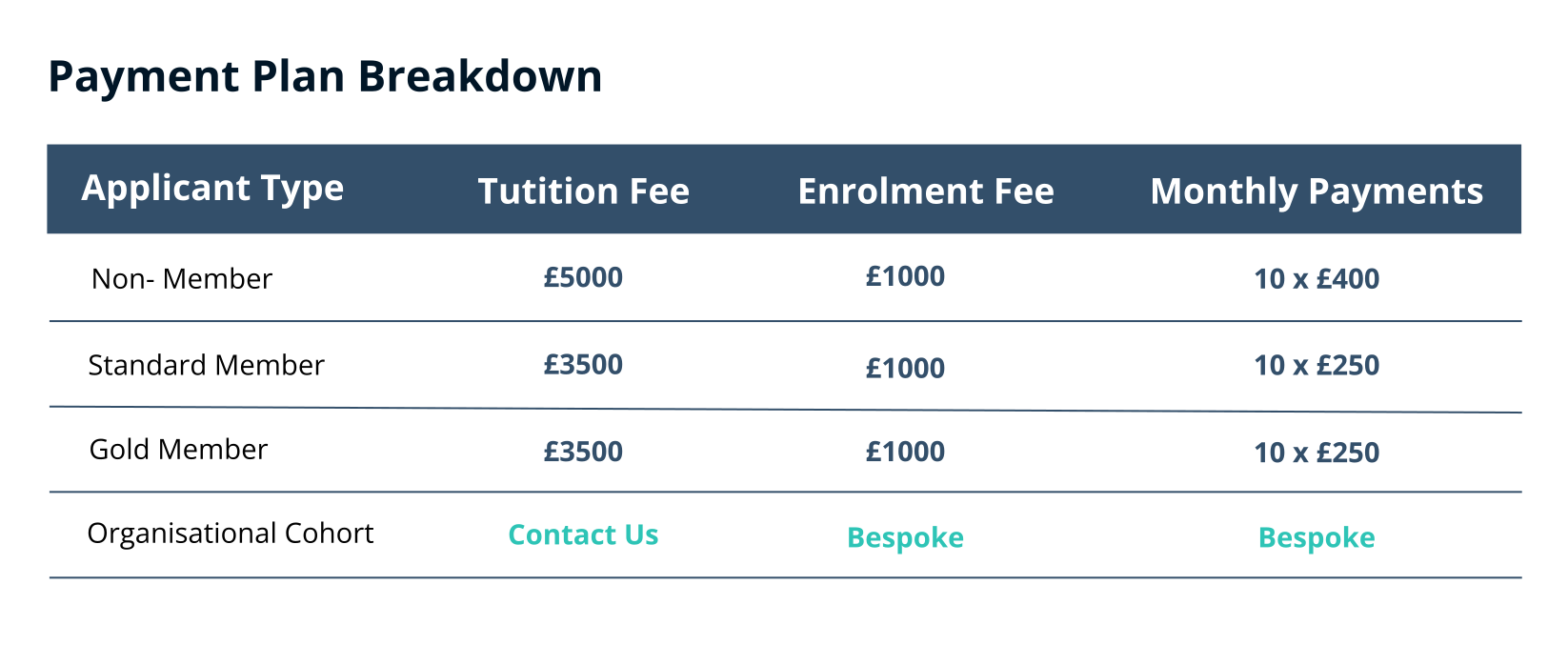
£1,000 Enrolment Fee
10 Monthly Payments of £400
Option 3 – TRB Member Rates
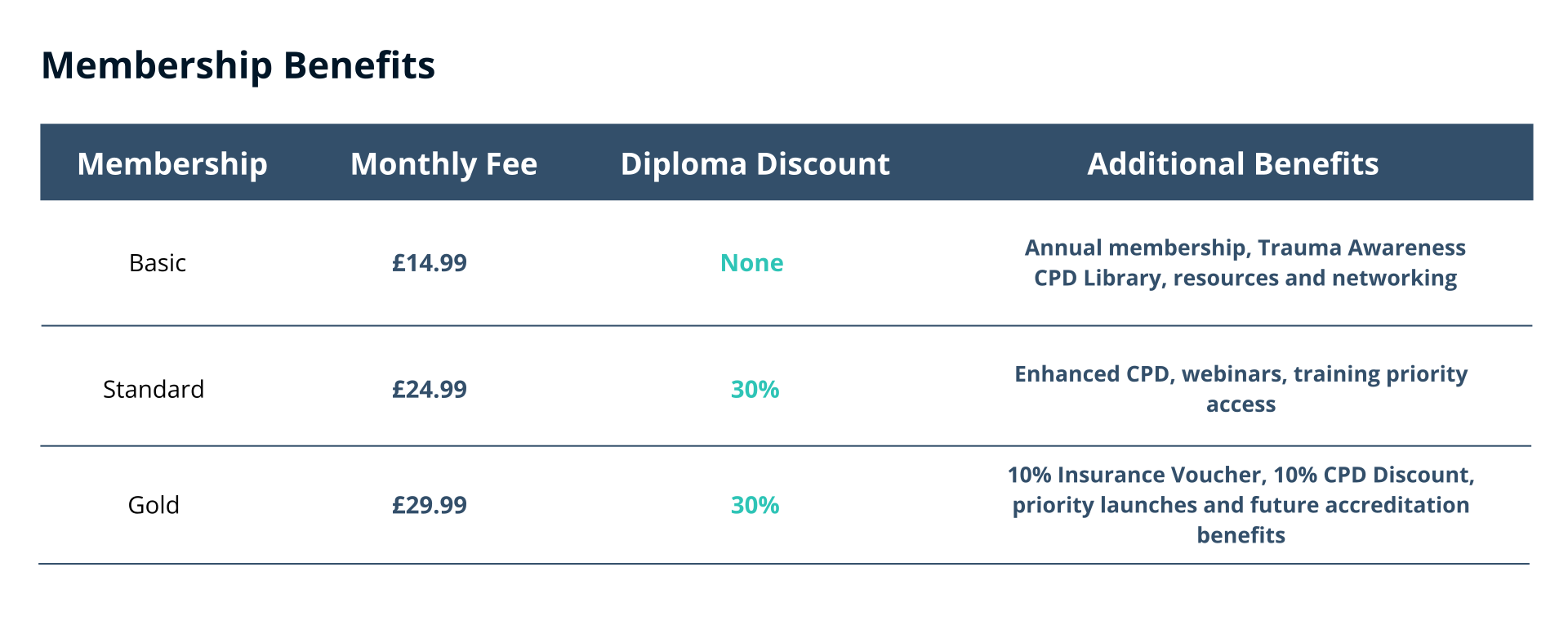
Eligible TRB Members receive discounted tuition fees depending on membership level.
Payments
TRB members receive preferential access to diploma programmes. Standard and Gold Members benefit from a 30% reduction in tuition fees, reducing the cost of the Level 5 Professional Diploma from £5,000 to £3,500. Additional membership benefits include ongoing CPD, professional networking, future specialist networking events, and future accreditation opportunities.
Entry Requirements
Documents Required
Applicants will typically meet one of the following criteria:
A Level 3 qualification or above in a relevant subject area
An undergraduate degree or equivalent professional qualification
A recognised qualification in health, social care, education, counselling, psychology, criminal justice, emergency services, military welfare, community support, or a related field
Applicants should possess the academic ability to study at Level 6 and complete written assignments, case-based assessments, reflective activities, and professional discussions.
Alternative Entry Route
TRB recognises that many experienced practitioners have developed substantial expertise through professional practice rather than formal academic qualifications.
Applicants who do not meet the traditional entry requirements may be considered through the Alternative Entry Route.
This may include individuals who can demonstrate:
Relevant professional experience
Voluntary or community-based practice
Leadership or management experience
Experience working within trauma-exposed populations
Prior continuing professional development (CPD)
Evidence of equivalent knowledge, skills, and professional capability
Applications submitted through the Alternative Entry Route will be reviewed individually and may be supported by a professional discussion, CV, portfolio of evidence, or other relevant documentation and potentially a written essay to examine the level of competence.
The purpose of this route is to ensure that experienced practitioners are not excluded from professional development opportunities solely due to the absence of formal academic qualifications.
Faculty
The Trauma Regulation Board (TRB) Specialist Faculties provide specialist expertise and quality oversight across specific areas of practice.
The Faculty supports the development of TRB standards, guidance, qualifications, and professional resources, helping to ensure that they remain relevant, practical, and informed by current knowledge and experience.
The Faculty includes individuals with relevant sector expertise and may include:
Subject Matter Experts
Experienced Practitioners
Internal Verifiers
Quality Assurance Representatives
Academic or Research Advisors
Individuals with relevant lived experience, where appropriate
Faculty membership will continue to expand as TRB develops its professional standards, qualifications, and sector-specific pathways.
The Specialist Faculty contribute to:
Development and review of professional standards.
Review of educational programmes and learning materials.
Sector-specific guidance and best practice resources.
Quality assurance and continuous improvement activities.
Consultation and feedback on emerging areas of practice.
Development of profession-specific competencies and pathways.
TRB currently maintains and is developing specialist expertise across several areas, including:
Trauma-Focused Therapy
Domestic Abuse
Children and Families
Social Care
Education
Criminal Justice
Health and Mental Health
Military and Veterans
Emergency Services
Additional Faculties and specialist advisors will be appointed as TRB continues to grow.
The purpose of the Specialist Faculties is to ensure that TRB standards, qualifications, and guidance are informed by practitioners and specialists with relevant expertise, supporting safe, consistent, and trauma-responsive practice across all sectors.
Frequently Asked Questions
For a full list of our FAQs page.
Is the Diploma recognised?
Yes. This programme is a Scottish Qualification Authority-validated Professional Diploma delivered through the Trauma Regulation Board (TRB).
This programme is designed for professionals working across health, social care, education, criminal justice, domestic abuse, emergency services, military, community, wellbeing, and leadership settings. It is suitable for practitioners seeking advanced trauma-informed knowledge and practical application within their professional role.
What Qualification will I receive?
Upon successful completion, learners will be awarded the SQA Validated Level 6 Professional Diploma together with certification of their chosen specialist unit.
How is the Programme delivered?
The diploma is delivered entirely online through a flexible learning platform.
Learners can study at their own pace whilst accessing lectures, learning materials, assessments, case studies, discussion activities, and professional learning resources throughout the programme..
Is the Diploma internationally recognised?
SQA qualifications are internationally recognised and respected for their quality assurance, academic standards, and vocational relevance..
Can I study while working full time?
Yes.
The programme has been designed for busy professionals and is delivered through flexible online learning. Most learners study alongside employment and can access course materials at times that suit their schedule.
Do I need previous trauma training?
No.
The diploma welcomes both experienced practitioners and professionals who are new to trauma-informed practice.
The programme provides a structured learning journey from foundational concepts through to advanced application.
Is this a therapy diploma
This diploma provides advanced professional education in trauma-focused practice. It is designed to enhance professional knowledge, understanding, and application within existing roles. It does not qualify learners to practise as a therapist or undertake regulated clinical interventions without appropriate professional registration and additional specialist training. However, you will be able to integrate this into your current practice and role.
Become a Specialist in your Field



© 2026 Trauma Regulation Board - All Rights Reserved │ Privacy Policy │Terms & Conditions