
Where Futures Are Rewritten:
Trauma-Informed Youth Work in Action
Youth workers are often the first to notice when a young person is struggling - whether through behaviour, withdrawal, or crisis. Without trauma-informed tools, even well-meaning responses can escalate distress or miss key safeguarding signs.
TRB supports youth workers with practical, trauma-informed resources to help them respond with clarity, care, and confidence - ensuring every interaction promotes safety, rhythm, and long-term wellbeing.
The Emotional Safety of Youth is already part of your remit
Youth workers operate at the emotional frontlines - safeguarding young people across education, care, housing, and justice settings. They hold space for trauma, crisis, and transformation, often without recognition, regulation, or protection.
Youth workers are often the first to notice signs of trauma, abuse, or emotional collapse - yet 45% of youth work roles require no formal qualification (National Youth Agency – Workforce Crisis Report, 2025)
Only 1 in 5 youth workers report receiving trauma-informed training or supervision (NYA Workforce Survey, 2025)
Early trauma intervention reduces escalation to crisis services by up to 60% (Early Intervention Foundation – Trauma-Informed Practice Review, 2024)
Youth workers in trauma-informed settings report 40% fewer critical incidents and safeguarding escalations (EIF & Local Authority Pilot Data, 2024)
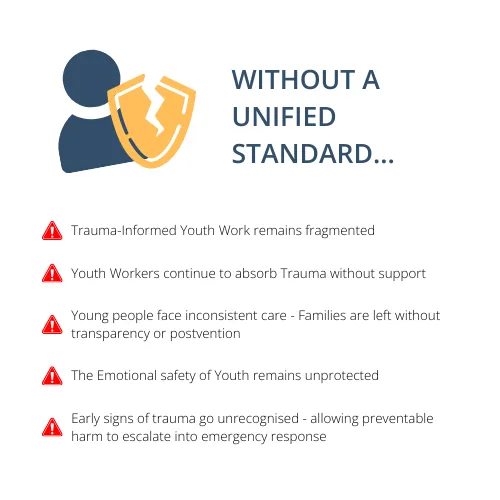
Without a National Standard, Youth Workers remain exposed - and young people remain unsupported


Legal & Regulatory Obligations
Your Duty Under Law and Regulation
Trauma-Informed Youth Work Is a Legal and Ethical Mandate:
Human Rights Act 1998 (Article 8) → Young people have a right to psychological integrity. Failing to recognise trauma or escalating without containment may breach this right.
Children Act 1989 & 2004 → Safeguarding duties include recognising trauma as a care need. Youth workers must promote wellbeing and prevent emotional harm.
Care Act 2014 (Transitional Safeguarding) → Young people aged 16–25 require trauma-informed safeguarding across housing, education, and justice settings.
Working Together to Safeguard Children (2023) → Requires early identification of trauma and inter-agency coordination. Youth workers are often the first to notice signs - their role is statutory.
Health and Social Care Act 2008 – Regulation 9 (Person-Centred Care) → All care must be tailored to individual needs - mandating recognition of psychological trauma in youth support plans.
TRB Alignment:
TRB verifies practitioner credentials and safeguarding eligibility before accreditation
TRB provides CPD-accredited training in trauma-informed youth work
TRB curates and distributes up-to-date trauma-informed research, guidance, and escalation protocols
TRB encourages CPD growth through reflective supervision, learning loops, and postvention frameworks
TRB maintains a public register of verified practitioners and accredited services for transparency and accountability
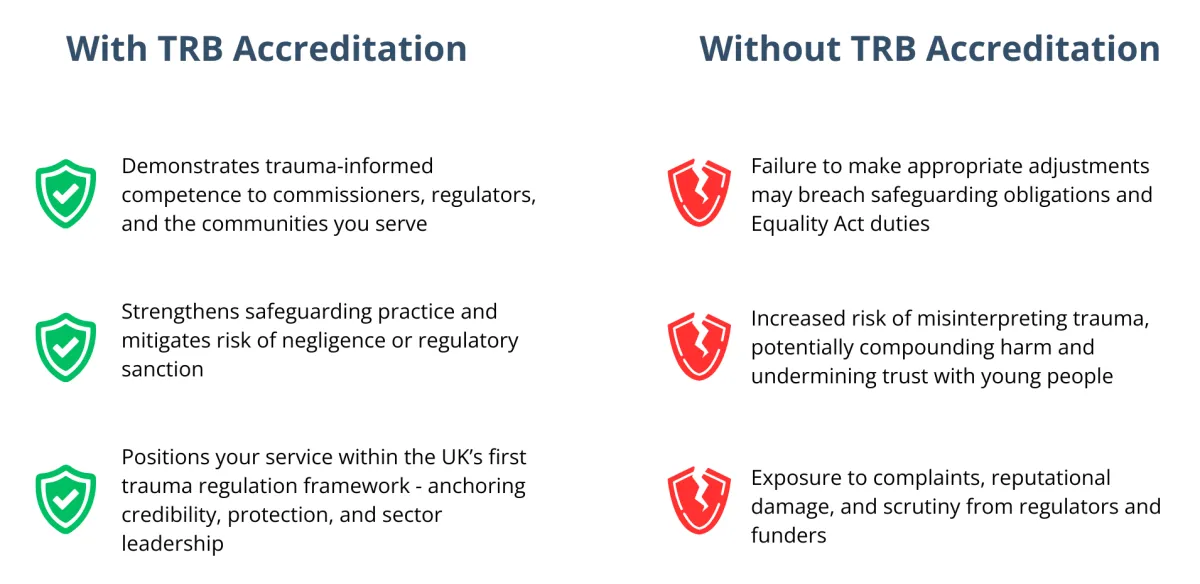
Neglecting Trauma-Informed safeguarding isn’t just unsafe - it’s a Legal and Ethical breach
Why Accreditation Matters
Join the TRB
Become a Trauma-Focused Youth Worker

Join the TRB Mailing List
Receive trauma-informed insights, practitioner updates, and exclusive newsletters directly to your inbox


© 2026 Trauma Regulation Board - All Rights Reserved │ Privacy Policy │Terms & Conditions
The Trauma Regulation Board operates under a non-exclusive licence from The Fairhurst Foundation LLC for the use of all trauma frameworks, models, assessment tools and educational content.