Trauma-Informed Suicide Prevention
One standard. One register. One national safeguard.
Ensuring every professional working with suicide risk is trauma-competent, legally aligned, and regulator-accredited.
Empowering Suicide Prevention through Trauma-Focused Practice
The Problem
Suicide Prevention is already part of your Remit
Across policing, health, social care, education, probation, and voluntary sectors, suicide prevention is not a specialist niche - it’s a daily responsibility.Yet most practitioners are unsupported by trauma-specific standards, supervision, or regulation, increasing risk for both clients and staff.
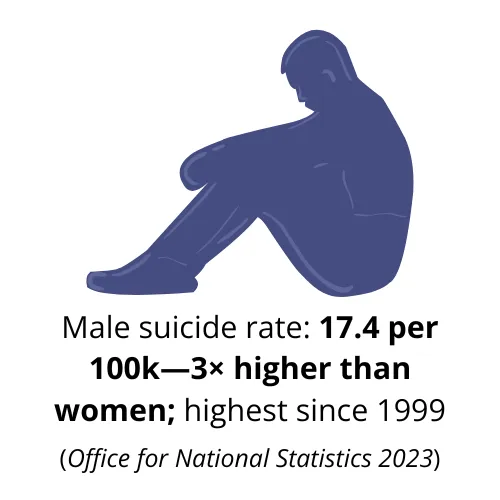
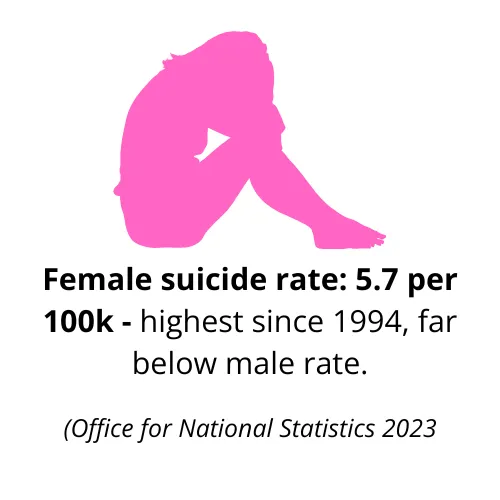
6,069 suicides were registered in England & Wales in 2023 (11.4 per 100 000); male rate 17.4 per 100 000 – the highest since 1999 – and female 5.7 per 100 000 – the highest since 1994 (ONS 2024)
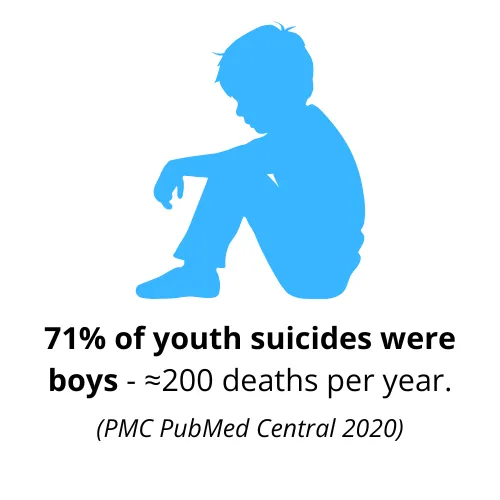
Suicide remains the leading cause of death among 20–34-year-olds (UK Parliament Commons Library 2025)
A life is lost roughly every 90 minutes across the UK (Samaritans, 2024)
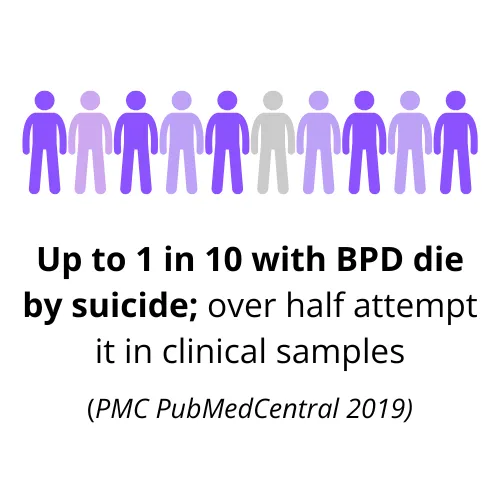
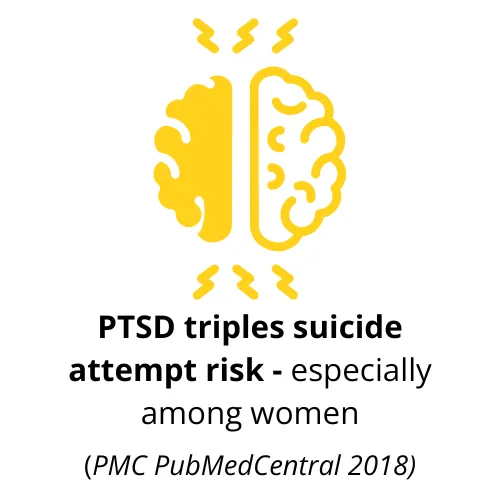
Trauma exposure doubles to triples the odds of suicide attempts (Angelakis et al., Psychological Medicine, 2019)
Despite these realities, few frontline professionals receive accredited trauma-informed training. This gap fuels unsafe responses - reactive escalation, retraumatisation, documentation failures, and moral injury among staff.
Without a unified standard:
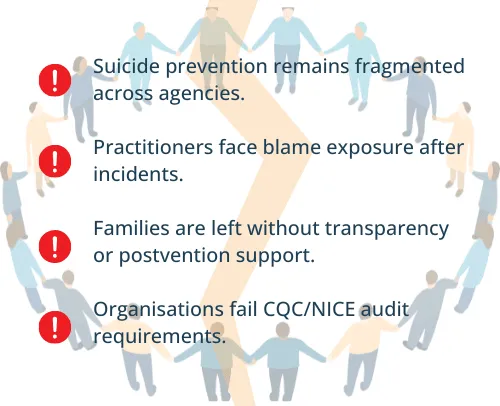
TRB exists to close this gap - by accrediting professionals and services in trauma-informed suicide prevention, setting a defensible national benchmark for safety, wellbeing, and accountability.
The TRB Solution: Accreditation That Protects You - and Those at Risk
Legal & Regulatory Obligations
Your Duty Under Law and Regulation
Trauma-Informed Therapy Is a Legal and Ethical Mandate for Practitioners:
Human Rights Act 1998 (Article 8) → Clients have a right to psychological integrity. Revisiting trauma without containment or specialist framing may breach this right
Care Act 2014 → Safeguarding duties include recognising trauma as a care need. Therapists must promote wellbeing and avoid retraumatisation
Mental Health Act 1983 (as amended) → Requires least restrictive interventions. Generic talking therapy may be contraindicated for PTSD
Professional Codes (BACP Ethical Framework) → Therapists must uphold a duty of competence and avoid harm under professional ethical standards
→ Requires all care to be tailored to individual needs - mandating recognition of psychological trauma in care planning
TRB Alignment:
TRB requires documented proportionality and escalation rationale within its audit tool.
TRB provides Section 42 decision templates & inter-agency recording protocols.
TRB includes incident-review, candour & learning-loop specifications.
TRB accreditation embeds both into competency frameworks and audit tools.
TRB verifies competency, supervision logs, and CPD currency.
Failure to align with these frameworks can constitute breach of statutory duty, negligence, or Article 2 violation
Why Accreditation Matters
Demonstrates compliance with national legislation and NICE guidance.
Protects staff through clear competency and supervision standards.
Provides commissioner-level assurance for funding and tendering.
Creates a coroner-defensible audit trail of decision-making.
Reduces recurrence rates through structured, trauma-aligned practice.
TRB Accreditation bridges the gap between Trauma Theory and Statutory Duty - Protecting lives, Practitioners, and Organisations alike
Join the TRB: Where Your Discipline Is regulated
The Trauma Response Board (TRB) is more than a membership - it’s a professional network committed to safeguarding the public by supporting those who serve it. In disciplines where trauma and ethical complexity are part of daily practice, TRB recognises the critical role professionals play in upholding trust, safety, and accountability.
Claim your CPD funding through us
Ready to be witnessed, accredited, and supported?
Annual Membership Includes;
Access to tailored Trauma Focused Suicide Prevention CPD packages
Priority funding eligibility
Digital badge accreditation
Invitations to TRB events and forums
Recognition in our published research archive
TRB Public Register Representation
Have You Experienced Trauma, Burnout, or Vicarious Exposure?
If you’re a therapist who has:
Absorbed trauma through your work
Carried vicarious exposure from distressing case stories
Endured burnout, compassion fatigue, or emotional shutdown
Managed your own healing journey while holding space for others
At the the TRB, we honour the reality that regulation begins within. That’s why we’ve partnered with the Trauma Recovery Education Centre (TREC) - a sanctuary for trauma-affected individuals seeking restoration, containment, and community
While TREC’s programs aren’t yet tailored specifically for Suicide Prevention workers, they offer powerful tools for:
Somatic regulation and emotional hygiene
Neuroscience-informed trauma recovery methods designed for practitioner resilience
Memory-mapping and closure exercises to process vicarious impacts and unburden your practice
Community support with others who understand
TRB members receive exclusive discounted access to all TREC courses and community spaces
Join the TRB
Lead every intervention with Trauma-Focused Credibility
Don’t risk retraumatisation - get TRB accredited

Join the TRB Mailing List
Receive trauma-informed insights, practitioner updates, and exclusive newsletters directly to your inbox



© 2026 Trauma Regulation Board - All Rights Reserved │ Privacy Policy │Terms & Conditions
The Trauma Regulation Board operates under a non-exclusive licence from The Fairhurst Foundation LLC for the use of all trauma frameworks, models, assessment tools and educational content.